Powering Canada’s AI Future
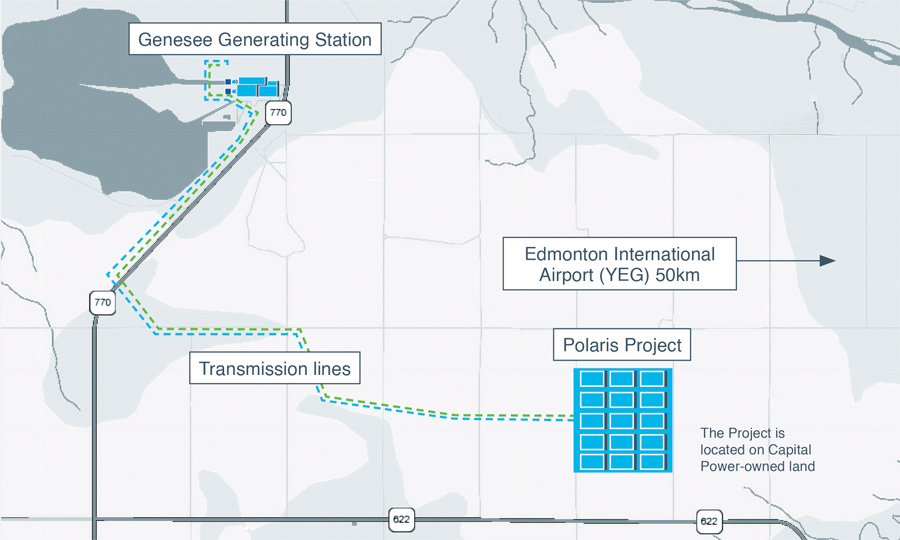 The Polaris @ Genesee Energy Campus (“Polaris Project” or “Project”) is a 1.0 to 1.5 GW hyperscale data centre project designed to meet Canada’s growing demand for secure, scalable digital infrastructure. Anchored in Alberta at our 1,800 MW Genesee Generating Station, which has set a new standard for gas generation efficiency in Canada, this initiative will dedicate a critical share of capacity to enabling Canadian artificial intelligence (AI) development in partnership with global technology leaders. This is a project of national importance and is able to advance toward a 2028 in-service date.
Speed-to-market build-out that preserves grid stability
The Polaris Project would be anchored in Alberta at our 1,800 MW Genesee Generating Station, which has set a new standard for gas generation efficiency in Canada, leveraging our existing electrical infrastructure and decades of operational expertise in Alberta. At Genesee, Capital Power currently has 0.5 GW of excess capacity and is testing and advancing innovative solutions for additional generation at the site.
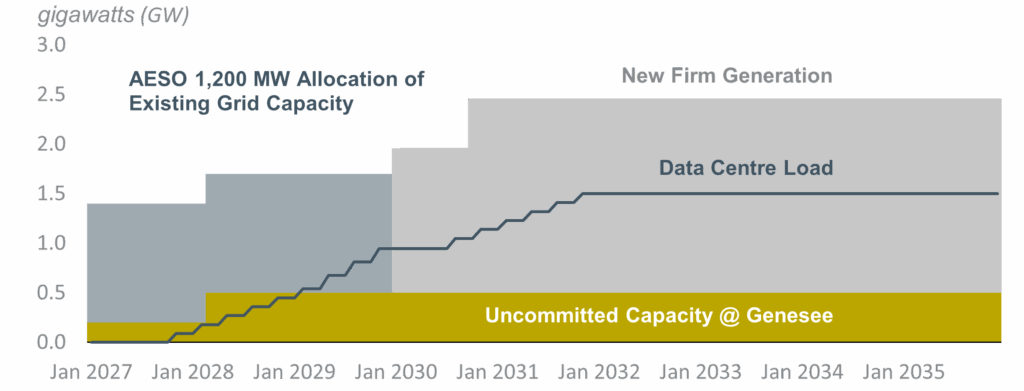
This Project is uniquely positioned to be in service by 2028 without compromising grid reliability or affordability, as it will ramp demand over multiple years, giving Alberta’s grid and market time to respond.
Once operational, the data centre would have backup generation readily available to be leveraged when the system faces emergency conditions, freeing up capacity to ensure Albertans maintain reliable access to power.
We have a proven track record in executing large-scale projects and are working with data centre hyperscalers that are prepared for long-term investment in Alberta, when there is a clear path to deploy at scale.
The evolution of digital infrastructure: from data centres to hyperscalers
Data centres are at the foundation of the digital world – secure facilities that store, process, and manage the data behind everyday technologies, like AI. Hyperscalers build on that foundation, advancing to the next stage of capability. These global cloud providers, including Google Cloud, Meta, and Microsoft Azure, operate massive data centre networks designed to deliver cloud computing services to millions of users, enabling unprecedented innovation.
Powering an economic transformation
The construction and operation of the Polaris Project are expected to have a positive impact on delivered electricity prices for Albertans, providing an estimated $1 billion in cost savings over eight years through lower transmission costs resulting from the increased load.
This will result in cost savings of approximately $9/MWh or about $6/month for the average residential customer (if built out to the full 1.5 GW).
Additionally, the Project is expected to generate millions of dollars in tax revenue for all levels of government.
Albertans will remain safeguarded through long-term competitive contracts for their electricity and the government’s rate of last resort program. Additionally, the AESO has indicated that the Project will not require transmission upgrades to connect to Alberta’s grid, ensuring that no additional transmission costs will be passed on to consumers as a result.
| Transmission Rate Impact Projection for 1.5 GW Data Center |
|
| 2034 | |
| Transmission system capital spend ($M) | $854 |
| Transmission connection capital spending ($M) | 112 |
| Capital maintenance and replacement ($M) | $332 |
| Total Revenue Requirement ($M) | $3,813 |
| DTS Energy (GWh) | 67,485 |
| Average transmission rate (S/MWh) | $57 |
| Average transmission portion (600kWh) of residential monthly bill (S) | $33 |
| Data Center Loading | |
| Peak Demand (MW) | 1500 |
| Annual Energy (GWh) | 13,140 |
| DTS Energy w/ Data Center Demand (GWh) | 80,625 |
| Average transmission rate with data center demand ($/MWh) | $47 |
| Transmission Cost Savings ($/MWh) | $9 |
| Net Benefits on a residential bill ($/month) | $6 |
Source: AESO Transmission Projection – https://www.aeso.ca/assets/Uploads/TRO_Factsheet_2025-WEB.pdf
Engagement
Supporting Indigenous prosperity
Capital Power, along with our project partner, have commenced initial discussions with local Indigenous communities. We are committed to Indigenous equity participation, and as several Alberta First Nations Chiefs recently outlined in a letter to the Alberta Government, they are ready to invest and see this as an industry that can bring long-term prosperity to their communities.
“Alberta is aiming for a championship-level digital economy. We just need the stadium doors open wide enough so that the star players can participate and everyone wins.” – Chief Tony Alexis, Alexis Nakota Sioux Nation
Community support
Capital Power is actively collaborating with Leduc County, which has provided written support for this project and has made the necessary bylaw changes to enable development.
Path to lower-carbon generation
Capital Power has invested nearly $6 billion into Alberta’s electricity system since 2001. This includes our approximately $1.6 billion Genesee Repowering project, which transformed Units 1 and 2 into the most efficient natural gas combined cycle units in Canada1, delivering up to 3.4 million tonnes of annual CO2 emissions reductions. Given the scale and longevity of the project, we are considering additional large-scale investments that would ensure the Polaris Project is secure, scalable, and lower-carbon generation.
1. Repowered Units 1 and 2 at Genesee Generating Station use Mitsubishi M501JAC turbines and Vogt heat recovery steam generators in combined cycle mode and are the most efficient combined cycle units currently operating in Canada.
Battery Energy Storage System
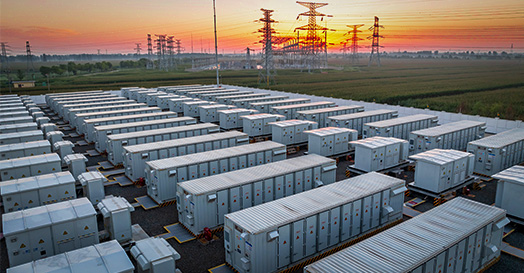
Battery investment can unlock 500 MW of near-term capacity for data centre development at Genesee, along with leveraging capacity on the Alberta grid. The battery project would support grid reliability and further enable:
- Intertie restoration, supporting additional inter-jurisdictional trade
- More efficient generation in Alberta that can leverage economies of scale
- Further renewable integration
Carbon Capture and Storage (CCS)
We’ve completed a CCS front end engineering and design (FEED) at Genesee in 2024. While currently shelved, the project would have the prospect of capturing 3 million tonnes of CO2 annually. With the prospect of future development at the site, there may be further opportunities to explore this technology.
Small Modular Reactors (SMR)
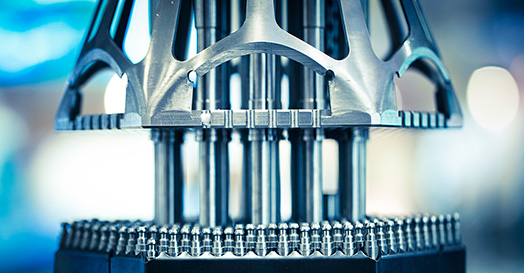
In partnership with Ontario Power Generation (OPG), we are undertaking a feasibility study on SMRs in Alberta. Should this progress, Genesee would become a nation-building opportunity as both an innovative power generation and data centre hub.
Alberta’s current energy surplus, bolstered by significant investments in generation, provides a stable foundation for this data centre, without compromising energy supplies or costs. Now is the time to act.
The ability to power, innovate, and connect will define the next generation of global prosperity, and we can lead in this digital era by building the Polaris @ Genesee Energy Campus, which will power world-changing innovation driven by AI. Advancing this project will strengthen Canada’s autonomy, resilience, and security, while contributing to lower-carbon energy growth and generating substantial economic benefits for Canadians.
Connect with us
 |
Robert Wydareny VP, Balanced Energy Solutions 1.403.717.8145 [email protected] |
 |
Matthew Davis VP, Regulatory, Policy & Government Relations 1.403.540.6087 [email protected] |
We’re ready to advance
- 🗹 Energy surplus in Alberta
- 🗹 Existing grid interconnection
- 🗹 Abundant land
- 🗹 Significantly advanced negotiation and development
- 🗹 Positive Indigenous and community consultation
- 🗹 Capable of hosting Tier IV-certified data centres that are essential for advanced compute operations