How a Multi-Year Energy Deal Could Redefine Michigan’s Economic Future
Capital Power’s Midland Cogeneration Venture facility, the largest natural gas-fired combined electrical energy and steam energy generating plant in the United States, located in Midland, Michigan, secured a new contract through 2040. The ripple effects could reshape the region’s industrial strategy – and its ability to compete for the next wave of manufacturing.
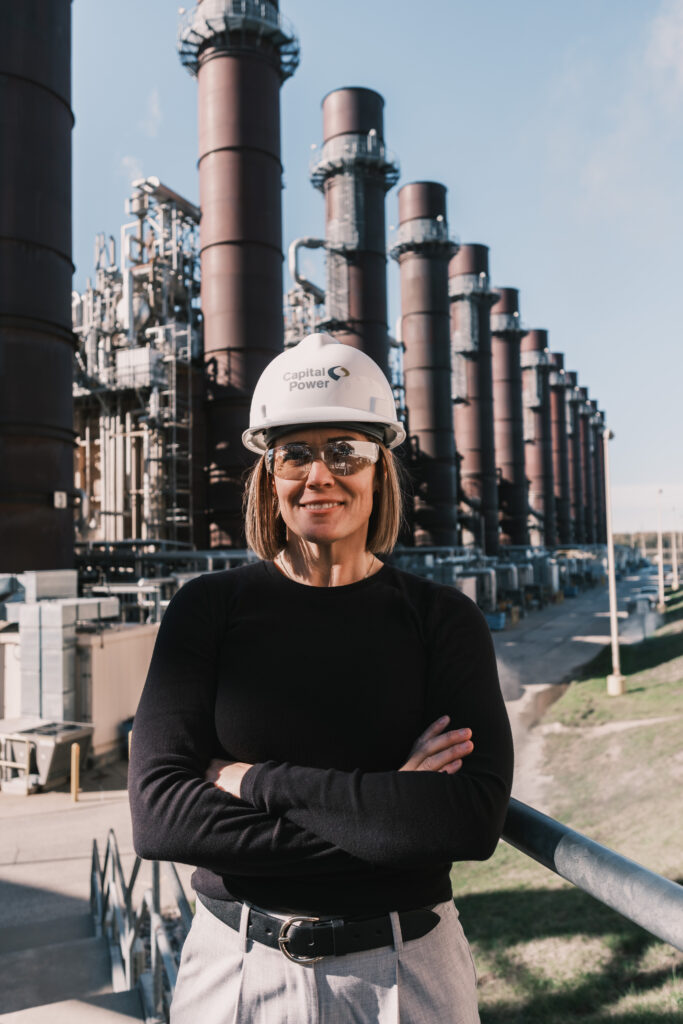
When Kristi Gledhill told her team at the MCV that their new power purchase agreement goes to 2040, the reaction was a mix of relief – and validation.
“This contract ensures job stability for everyone here,” says Gledhill, MCV Plant Manager. “Knowing that our work is secured for many more years allows us to plan for the future with confidence and continue to support our families and community.”
In Michigan, where the energy transition is meeting with industrial ambition, the MCV contract represents something bigger: a bet on the state’s ability to balance climate goals with the hard realities of keeping factories running and data centers powered.
The deal keeps the ~1,600-megawatt natural gas facility operating as a critical piece of Michigan’s energy infrastructure. For Midland, a city of roughly 42,000 people, the stakes are outsized. MCV is the region’s second-largest taxpayer, contributing $15 million annually in property taxes, and it supports more than 100 local vendors.
But the contract’s significance extends far beyond Midland. As Michigan races to attract semiconductors, advanced manufacturing, and energy-hungry data centers, the question of whether the state can deliver reliable, affordable power has become existential.
The Baseload Problem
Here’s the challenge Michigan faces: Under Governor Gretchen Whitmer’s MI Healthy Climate Plan, the state is accelerating the retirement of coal plants. The goal is to achieve economy-wide carbon neutrality by 2050. At the same time, industrial demand for electricity is rapidly growing.
Natural gas facilities like MCV are the bridge.
“If Michigan needs to greatly improve our ability to provide affordable, reliable energy, facilities like MCV are vital to that goal,” says State Representative Bill Schuette, whose district includes Midland. “Renewing their contract makes that goal easier to achieve.”
The economics are straightforward: Renewable energy is expanding rapidly in Michigan, but solar and wind can’t yet provide the 24/7 baseload power that growing economies require. Battery storage is improving, but it’s not ready to anchor a grid serving major employers and economic drivers like automotive plants, chemical manufacturers, and increasingly, data centers that operate around the clock.
Natural gas plants like MCV fill that gap. They can ramp up or down quickly to complement renewables, and they provide the reliability that industrial customers demand. For a state trying to attract billions in manufacturing investment, that reliability isn’t optional – it’s table stakes.
“Affordable, reliable energy requires substantial baseload production – the kind of which MCV is an integral player,” Schuette says.
A Regional Anchor
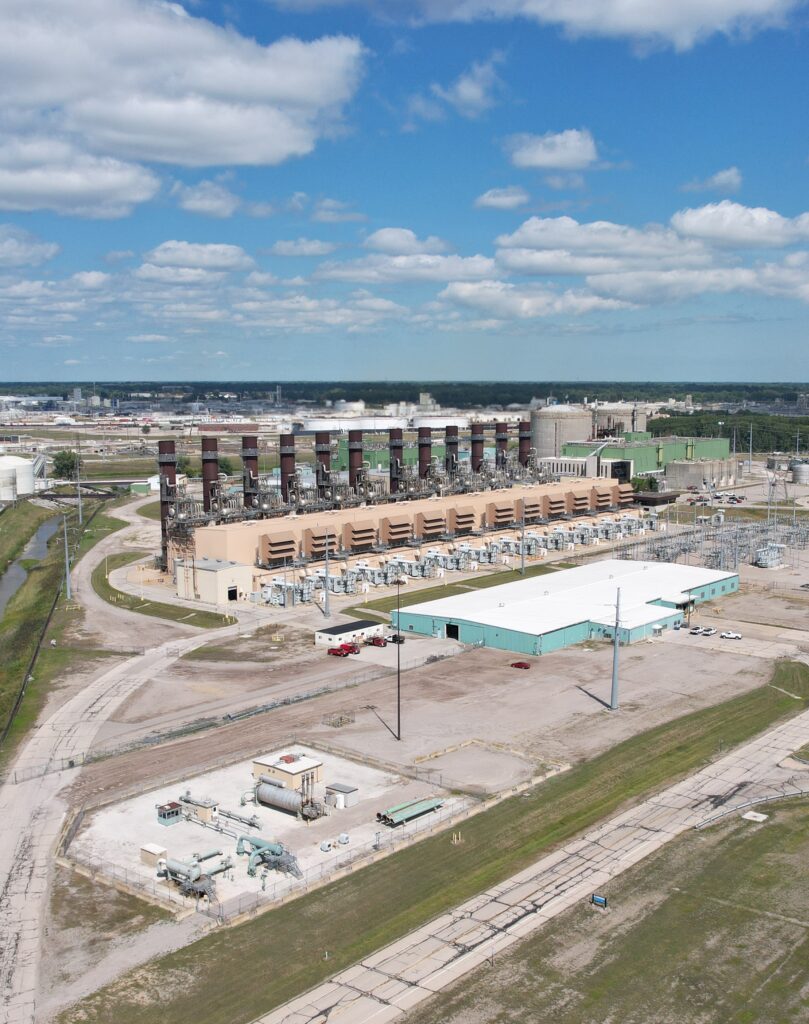 The MCV facility doesn’t just generate electricity and steam; it anchors an entire regional economy.
“When you have a facility like MCV providing stable, long-term energy infrastructure, it sends a signal to investors that this region is serious about supporting industrial growth,” Jon Sohn, Capital Power’s VP of Regulatory, Policy & Government Relations (U.S.) says. “That stability attracts additional investment, creates jobs, and generates tax revenue that supports schools, roads, and public services.”
The numbers bear that out. Beyond the $15 million in annual property taxes, MCV employs a skilled workforce and contracts with more than 100 local vendors for maintenance, engineering, and operations support. That creates a multiplier effect: Each job at the plant supports additional jobs in the surrounding economy.
For Gledhill, that local impact is personal. “Our collective efforts make a substantial contribution to the delivery of reliable electricity and steam for residential, commercial, and industrial purposes, thereby supporting a stable and prosperous future for all,” she says. “I want to express how proud we should all be of this achievement.”
The Data Center Opportunity
If there’s a subplot to the MCV contract, it’s what comes next.
With geographic advantages, including a cooler climate, lower natural disaster risk, and proximity to major population centers, Michigan is positioning itself to capture a share of the national data center boom – a sector that’s expected to double its electricity consumption over the next decade, primarily driven by artificial intelligence and cloud computing. This influx of data centers, combined with Michigan’s longstanding manufacturing base, further enhances the state’s ability to increase productivity and contribute more to the country’s overall GDP growth. Today, Michigan ranks in the top twenty states for GDP, and these new investments signal a diversification that strengthens its economic future. What it needs is proof that it can deliver the power.
That’s where facilities like MCV become strategic assets.
“With a growing semiconductor industry in the area and the need for more data centers, the possibilities are numerous and exciting,” Schuette says. “Michigan historically is a leading manufacturing state, in automobile production obviously, but also in specialty chemicals. The infrastructure is here. The question is whether we can make the case to investors that we’re ready.”
The MCV contract helps make that case. By securing long-term energy capacity, the region signals to potential industrial tenants – whether chipmakers, battery manufacturers, or hyperscale data center operators – that the grid can support their needs.
Capital Power’s CEO Avik Dey frames the contract as a validation of Michigan’s market potential. “This partnership reflects our confidence in Michigan’s energy future and our commitment to supporting the region’s economic growth,” Dey says. “We’re not just providing power – we’re enabling the infrastructure that makes industrial investment possible.”
The Competitiveness Question
Michigan isn’t competing in a vacuum. States across the Midwest and South are aggressively courting the same industries with tax incentives, streamlined permitting, and, critically, energy guarantees.
Schuette is blunt about the challenge. “We need to do more to make Michigan a more attractive state to do business,” he says. “That is going to require abundant, affordable energy. This is a step in the right direction.”
Looking to 2040
The new contract runs through 2040 – nearly 15 years from now. In energy terms, that’s an eternity. By then, Michigan’s grid will look dramatically different. More renewables. More storage. Possibly nuclear.
But for now, the contract reflects a pragmatic reality: The energy transition is a marathon, not a sprint. And for industrial states like Michigan, managing that transition without sacrificing economic competitiveness requires keeping reliable generation online.
Gledhill sees the contract as both an endpoint and a beginning. “This is a moment for celebration and a reminder of the incredible work we do here,” she says. “Our commitment to excellence and reliability has made this possible, and I am confident that we will continue to thrive and achieve even more in the coming years.”
For Midland, for Michigan, and for the industrial Midwest more broadly, the MCV contract is a bet that energy reliability and economic ambition can coexist – even as the rules of the game are being rewritten.